
Choosing your Footwear
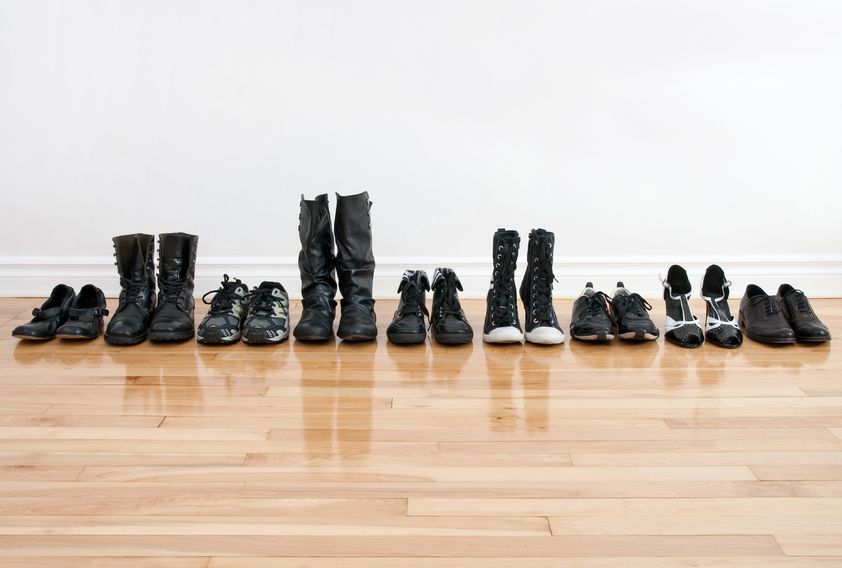
Feet come in all shapes and sizes. Shoes also come in many shapes and sizes, but it is not always easy for everyone to find the right shoe for them. When choosing a shoe it is important to have a good look at your own foot to ensure that it really is going to fit comfortably into the shoe you have selected.
What to consider about your own feet…
The length of your feet when standing up
Many people have one foot longer than the other so it is important to make sure you fit the shoes to the longer foot. When you stand up and are walking your foot lengthens somewhat at certain times during gait, so always walk around in the shoes you are trying on. You need around a 1cm gap between your longest toe and the end of the shoe when you are standing to ensure your toes won't hit the end of the shoe when walking.
The width of your forefoot
Typically the widest part of the forefoot is where the toes meet the foot (the metatarsophalangeal joints). If a person has a bunion the foot can be very wide and finding shoes to fit can become difficult.
The width of the foot at the toes
Some people's toes splay and create a squarer shape, whereas others curve a bit and make a more rounded shape. It is important to look at the shape of the toe box of the shoe and try to make sure your toes are going to fit into it without being squashed.
The height of your toes
While some people have straight toes which are thus not very high, others have toes that curl down (hammer toes or claw toes) which means that the knuckle sticks up. These knuckles can very easily rub on the top of a shoe if the toe box is not deep enough.
The height of your instep
This is the area on top of your foot above your arch. Shoes that have laces, buckles or velcro over the instep are great because they can be adjusted to suit you.
The width of your heel
If you have a wide heel and try to fit it into a shoe with a narrow heel you will potentially end up with areas that dig in and rub. Conversely, a narrow heel in a wide-heeled shoe will slip, meaning you need to claw your toes or change your gait to keep the shoe on.
Swelling
If you are prone to foot swelling it may be worth choosing a shoe that can be made tighter or looser using laces, buckles or velcro. It is advised to shop for your shoes later in the day when your feet may have some swelling to ensure that you don't choose a shoe that is too tight.
What to look for in a shoe
The shoe should bend at the toe – and nowhere else!
If you hold the shoe at the heel and the toe and try to bend it in half, the shoe should bend where the toes would bend, not in the middle where the arch is. If a shoe bends in the middle it is not giving enough support at the arch.
The shoe shouldn't twist too much
A small amount of movement is necessary, but a shoe that twists too much is not supportive for the foot.
The materials used in the shoe's construction
Leather is one of the most common and best materials used for shoe construction – it breathes and has the potential to stretch slightly to accommodate the shape of your foot. People with very wide feet, bunions or clawed toes often benefit from soft, flexible materials in the toe box or instep area.
A firm heel counter
The heel counter is the area of the shoe around the back and sides of the heel. It shouldn't move too much when squeezed – this gives the ankle and heel support and stability when walking.
The sole of the shoe
Be wary of soles that are too slippery or too grippy. Think about what surfaces you will be walking on and make sure the sole is appropriate for it. Aim for only a moderate amount of cushioning, as too much can reduce stability and balance.
Adjustable straps / buckles / velcro / laces
Having shoes that have the potential to be tightened or loosened to fit your foot are best, especially for people who experience variable amounts of swelling in the feet.
The height of the heel
Wearing a shoe with a heel changes not only the foot's posture and function, but also the posture of the whole body. It is recommended to wear 'flat' shoes with only a small heel (around 1 inch). If you must wear heels, keep them wider rather than thinner, and lower rather than higher, aiming for a maximum of 5cm. Try not to wear high heels for long distances or every day.
The weight of the shoe
This can be of particular concern for elderly people. It is possible to find lightweight shoes that still offer stability and protection for the feet.
Suitability for Orthotics
People who wear orthotics have to be particularly choosy about what style of shoe they buy. The shoe needs a reasonably deep heel counter and needs to be wide enough to accommodate the orthotic, with the instep deep enough (or adjustable) as an orthotic usually lifts the arch, making the foot sit higher in the shoe.
These recommendations for choosing footwear are meant as a general guide only, and if you have any particular concern it is advised that you speak to a podiatrist or footwear professional about your situation personally. These guidelines are for adults, as children's feet are still growing and have different needs – see our Children's Feet page for recommendations on children's footwear. We are happy to speak to you about your footwear needs and recommend suitable footwear styles for you.