
Skin Care for your Feet
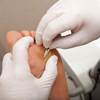
Healthy skin is an important part of overall foot health. We treat a range of common skin conditions including corns, callouses, cracked heels and fungal infections such as tinea.
Corns and Callouses
Corns and callouses usually build up on areas where there is increased pressure or friction on the foot, whether from footwear rubbing or the biomechanical structure of the foot. A callous covers a larger area and is of uniform thickness, while a corn forms where pressure is concentrated on one small area, creating a painful 'core'. Both can generally be removed on the spot by a podiatrist, painlessly in most cases – over the counter acid treatments are not recommended, especially for anyone with diabetes or peripheral vascular disease.
Cracked Heels
Cracked heels (heel fissures) occur when the skin around the heel becomes thickened and dry, and the weight of the body causes it to crack. It's best to have the calloused skin around the fissure removed by a podiatrist, and to keep the area hydrated with a heel balm and, where useful, paraffin wax treatments.
Tinea / Athlete's Foot
The skin of the feet can be prone to fungal infections due to the warm moist environment in our shoes. Tinea infections present in different ways including small fluid filled blisters on the bottom of the foot, dry peeling skin around the edge of the heels, pits in the sole of the foot or toes, or cracks and redness between the toes. Fungal infections are usually itchy, but not always, and are very contagious, transmitted through water in shower bases, public swimming pools or shared footwear.
Treatment for Tinea
Broad spectrum topical anti-fungal creams available over the counter at pharmacies are usually very effective at treating tinea skin infections. Different creams use different active ingredients, so if one doesn't work effectively it may be worth trying a different one, as tinea can be caused by a variety of fungal organisms. If you still have no success, a skin scraping can be taken by a GP to confirm the type of organism and advise specific treatment.